A thriving aquarium begins with balanced water. Discover how pH, hardness, the nitrogen cycle, and essential nutrients work together to create a healthy freshwater ecosystem—and why understanding water chemistry is the key to long-term success.
- Freshwater Aquariums
- July 25, 2026
- 178 views
The Invisible Balance: Mastering Water Chemistry for a Thriving Freshwater Aquarium
Every thriving aquarium tells a story of balance. Crystal-clear water, vibrant aquatic plants, active fish, and healthy microorganisms don’t exist by chance—they are the result of a carefully maintained chemical equilibrium. Water may appear clear to the eye, but beneath the surface, countless chemical interactions are constantly shaping the health of the entire ecosystem.
Understanding water chemistry is not about memorizing numbers; it’s about learning how every parameter works together. When one element shifts, the entire ecosystem responds. The secret to a successful freshwater aquarium lies in maintaining this invisible balance.
Water Chemistry – The Language of an Aquarium
Think of an aquarium as a miniature natural ecosystem. Every fish breathes, every plant absorbs nutrients, beneficial bacteria break down waste, and minerals dissolve into the water. Each of these processes continuously changes the water’s chemistry.
Unlike rivers or lakes, an aquarium is a closed ecosystem. Nature cannot automatically correct imbalances. It is the aquarist’s responsibility to monitor and maintain the water so that every living organism can thrive.
When water chemistry remains stable, fish experience less stress, plants grow vigorously, beneficial bacteria flourish, and algae are naturally kept under control.
The Essential Parameters That Work Together
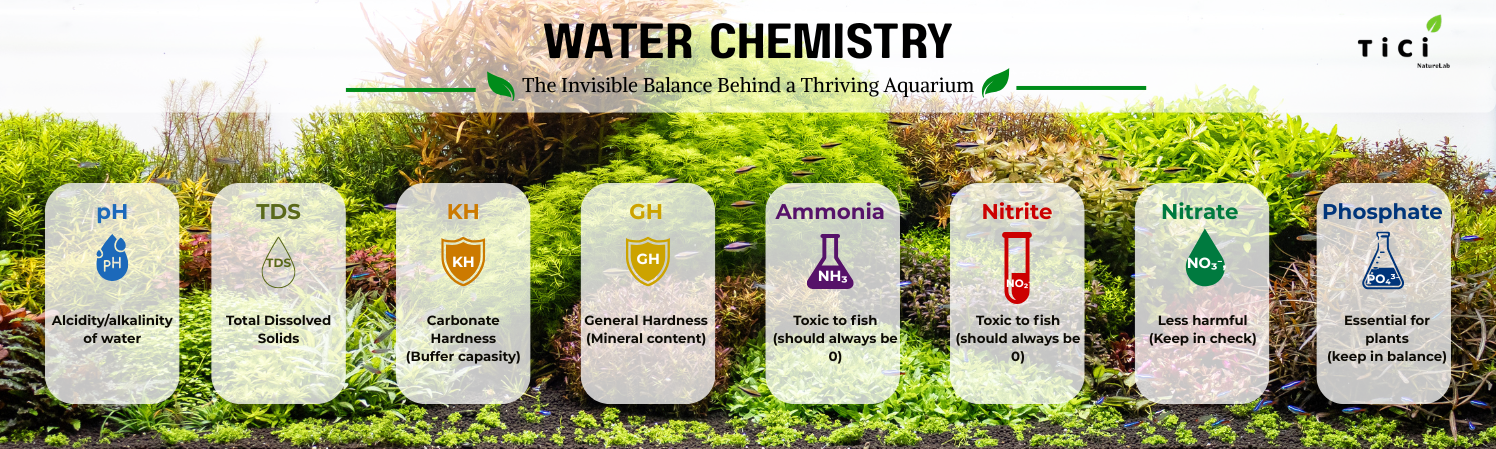
pH – The Foundation of Balance
The pH level determines whether water is acidic, neutral, or alkaline. Different species have evolved in different environments, meaning their preferred pH varies. However, stability is often more important than achieving a specific value.
Sudden changes in pH can stress fish, reduce biological filtration efficiency, and affect nutrient availability for plants. A stable pH creates a predictable environment where aquatic life can adapt and flourish.
GH (General Hardness) – The Mineral Reserve
General Hardness (GH) measures the concentration of calcium and magnesium dissolved in water.
These minerals are essential for:
- Healthy skeletal development in fish
- Proper plant growth
- Successful molting in freshwater shrimp
- Various biological functions within the aquarium
Too little GH can lead to mineral deficiencies, while excessive hardness may not suit species naturally found in soft-water habitats.
KH (Carbonate Hardness) – The Natural Buffer
If pH is the destination, KH is the stabilizer that keeps it from changing unexpectedly.
KH measures the concentration of carbonate and bicarbonate ions that buffer the water against sudden pH swings.
Adequate KH helps:
- Maintain stable pH
- Prevent dangerous pH crashes
- Support healthy biological filtration
Without sufficient KH, even small changes in the aquarium can create significant fluctuations in water chemistry.
TDS (Total Dissolved Solids) – The Overall Picture
TDS measures the total amount of dissolved substances present in the water, including minerals, salts, and nutrients.
Although it doesn’t identify individual compounds, it provides a useful overview of water consistency. Monitoring TDS is especially valuable when using RO water, remineralizing water, or maintaining breeding aquariums where stability is critical.
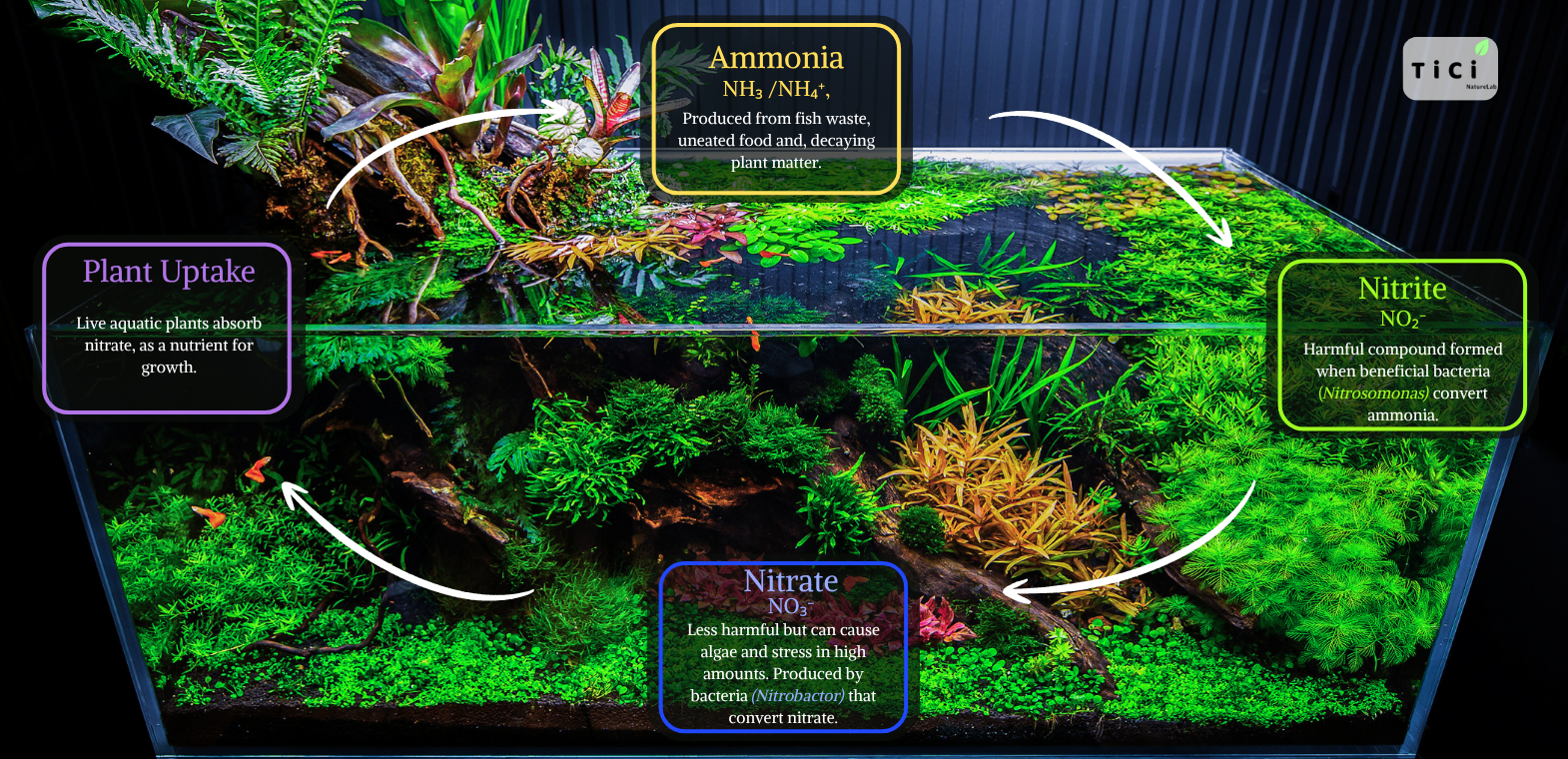
The Nitrogen Cycle – Nature’s Cleaning System
Every aquarium continuously produces waste. Fish excrete ammonia, uneaten food decomposes, and dead plant matter breaks down.
This is where beneficial bacteria become the unseen heroes of the ecosystem.
They convert:
Ammonia (NH₃) → Nitrite (NO₂⁻) → Nitrate (NO₃⁻)
- Ammonia is highly toxic to fish.
- Nitrite is also dangerous and interferes with oxygen transport in fish.
- Nitrate is considerably less toxic and serves as an important nutrient for aquatic plants when maintained within appropriate levels.
Without these beneficial bacteria, even the cleanest-looking aquarium would quickly become uninhabitable.
Phosphate – Friend or Foe?
Among aquarists, phosphate (PO₄³⁻) is often misunderstood. Many assume phosphate is something that should be eliminated, but the truth is quite the opposite.
Phosphate is an essential macronutrient required for healthy plant growth. It plays a vital role in energy transfer, root development, and overall plant metabolism.
Problems arise only when balance is lost.
Excess phosphate—combined with poor maintenance, excessive feeding, or nutrient imbalance—can encourage algae growth. On the other hand, phosphate deficiency may result in slow-growing, unhealthy plants.
The goal is not to remove phosphate but to maintain an appropriate balance alongside nitrogen, potassium, carbon dioxide, and light.
Why Regular Water Testing Matters
Water chemistry changes gradually, often long before visible symptoms appear.
By the time fish begin showing stress or algae becomes noticeable, the imbalance may already be significant.
Routine testing allows aquarists to monitor:
- pH
- GH
- KH
- TDS
- Ammonia
- Nitrite
- Nitrate
- Phosphate
Instead of reacting to problems, regular testing helps prevent them.
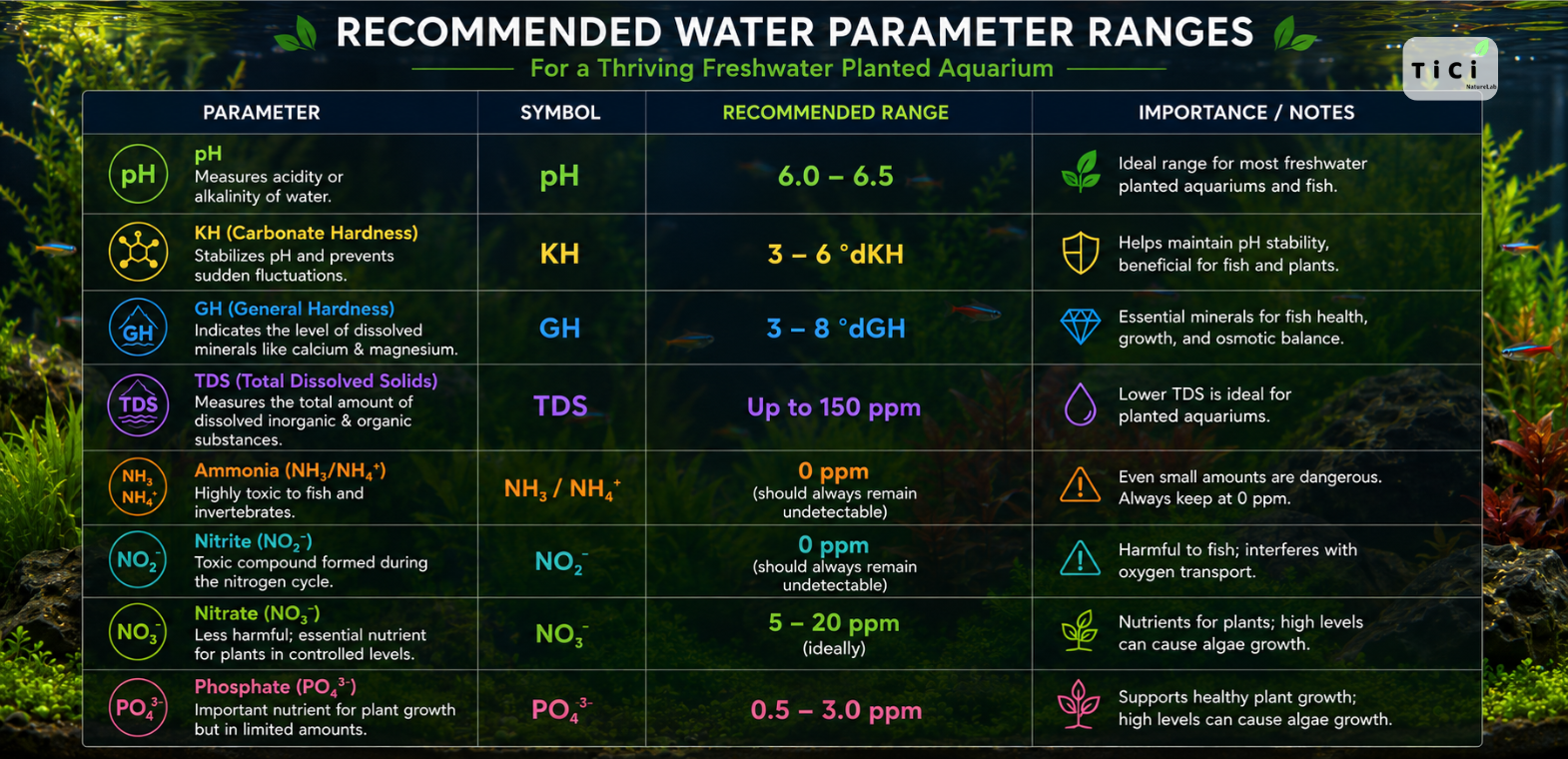
Remember, these values are not rigid rules but recommended ranges. A healthy aquarium is built on balance and stability, where all parameters work together to support fish, plants, and beneficial bacteria.
Every Action Changes the Balance
Many everyday aquarium activities influence water chemistry without us realizing it.
These include:
- Water changes
- Feeding fish
- Adding fertilizers
- CO₂ injection
- Introducing driftwood or rocks
- Aquarium substrate
- Stocking density
- Water source (tap water or RO water)
Each decision shifts the chemical balance in some way. Understanding these interactions helps create a more stable ecosystem over time.
The Biggest Mistake: Chasing Perfect Numbers Instead of Balance
One of the most common mistakes among beginners is trying to achieve the “perfect” pH, hardness, or nutrient level.
In nature, aquatic ecosystems are not defined by a single ideal value—they thrive because their water remains balanced and stable. Every parameter, from pH and KH to nitrate and phosphate, works together as part of a larger system.
Constantly adjusting one parameter without considering the others can disrupt this equilibrium and stress fish, plants, and beneficial bacteria.
Rather than chasing perfect numbers, aim to maintain a well-balanced and consistent environment. When all water parameters are in harmony, the aquarium becomes healthier, more resilient, and far closer to the ecosystems found in nature.
The Interconnection
Water chemistry is not simply a collection of test results—it is the invisible force that keeps an aquarium alive. Every parameter, from pH and hardness to ammonia, nitrate, and phosphate, is interconnected. When one changes, the others respond. Just like nature itself, a successful aquarium depends on harmony rather than perfection.
The healthiest freshwater aquariums are built not by controlling every single value, but by understanding the relationships between them. Maintain stability, test regularly, and respect the natural balance of the ecosystem. When the chemistry is in harmony, everything else—from vibrant plants to healthy fish—falls beautifully into place.