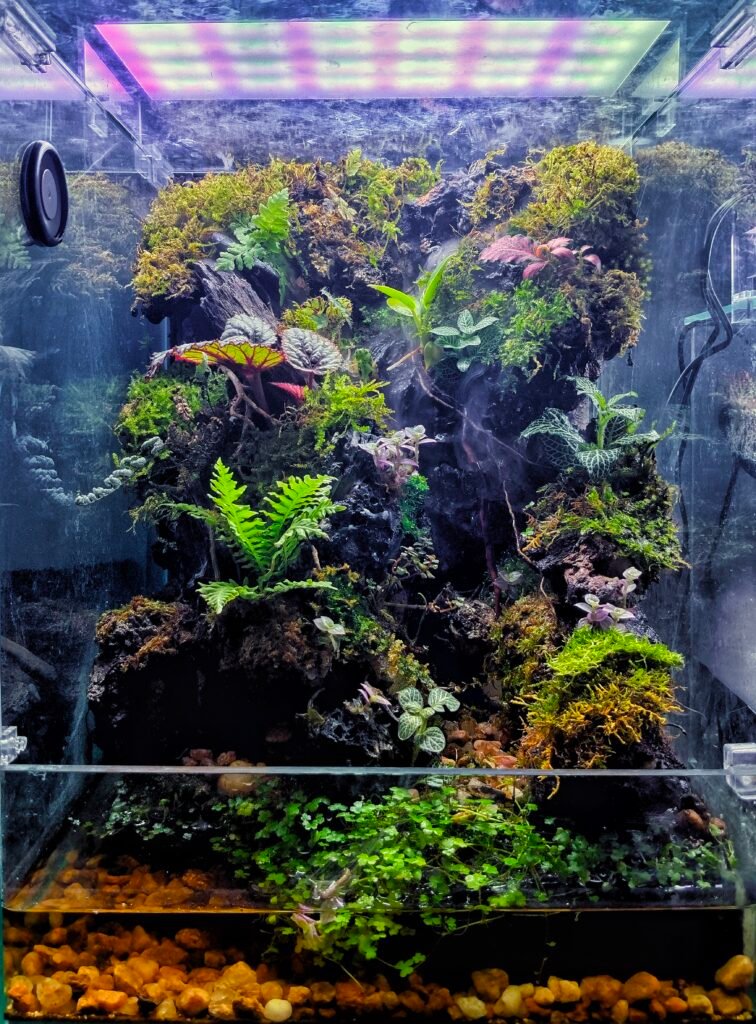
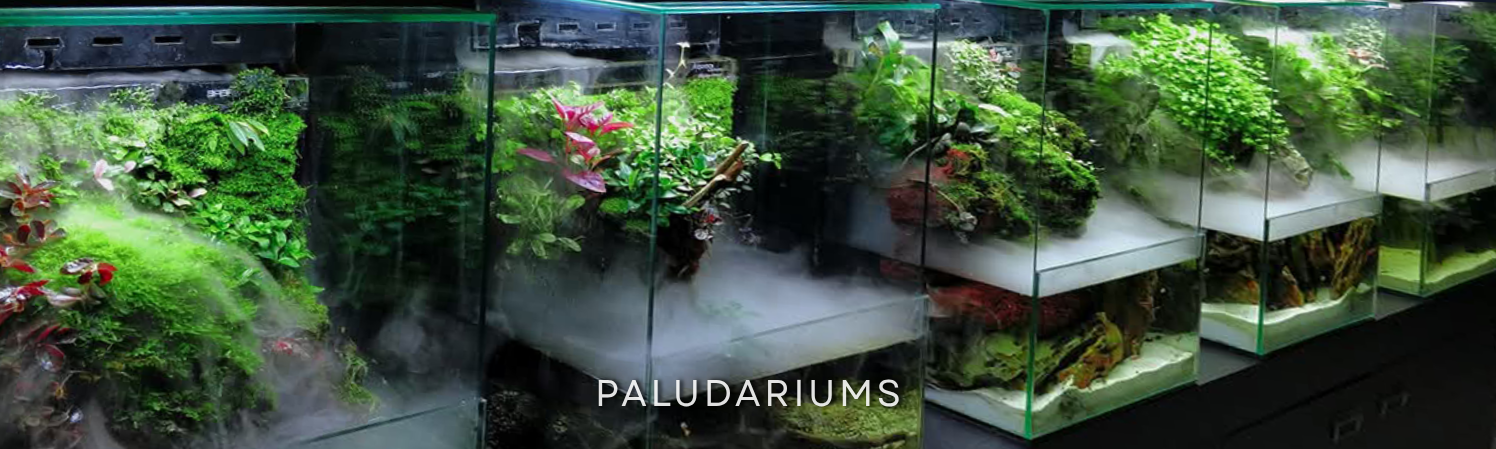
A paludarium represents a unique fusion of aquatic, terrestrial and aerial environments within a single enclosure. Unlike traditional aquariums or terrariums, a paludarium recreates a semi-aquatic ecosystem, often resembling riverbanks, wetlands, or rainforest edges. This integrated setup allows for greater biodiversity and offers an immersive, naturalistic display.
- Indoor Green Systems, Paludariums
- May 12, 2026
- 267 views
Paludarium Build: Water + Land + Air in One Tank
What Is a Paludarium?
A paludarium is a hybrid system combining three ecological zones:
- Aquatic Zone: The submerged portion that supports fish, shrimp, or aquatic plants
- Terrestrial Zone: The land area designed for plants, mosses and sometimes amphibians
- Aerial Zone: The above-water environment with high humidity, suitable for tropical plants
This combination creates a dynamic ecosystem where water, soil and air interact continuously.
Essential Components
- Tank and Structure
A glass tank or aquarium serves as the base. Internal structures are built using foam, rocks, or driftwood to create elevation and separation between land and water areas. - Filtration and Water Flow
A reliable filtration system ensures water quality. Many paludariums incorporate small waterfalls or streams, which enhance oxygenation and mimic natural habitats. - Substrate Layers
Different substrates are used for each zone. Aquatic areas may include gravel or aqua soil, while terrestrial zones require a well-draining soil mix. - Lighting
Full-spectrum LED lighting supports both aquatic and terrestrial plant growth. Light intensity should be adjusted based on plant requirements. - Humidity Control
Closed or semi-closed setups help maintain high humidity, essential for mosses, ferns and tropical plants.
Plant Selection
A successful paludarium relies on choosing plants suited to different moisture conditions:
- Aquatic plants: Anubias, Java Fern, Cryptocoryne
- Semi-aquatic plants: Bucephalandra, Hygrophila
- Terrestrial plants: Mosses, ferns, small tropical foliage plants
Selecting compatible species ensures balanced growth across all zones.
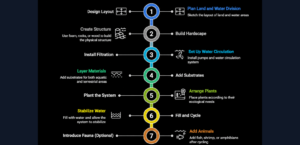
Step-By-Step Build Overview
Benefits of a Paludarium
- Replicates natural ecosystems more realistically
- Supports diverse plant and animal species
- Enhances aesthetic appeal with multi-level design
- Encourages ecological learning and observation
Challenges to Consider
- Maintaining balance between water and land conditions
- Managing humidity and preventing mold growth
- Ensuring proper filtration and water quality
- Selecting compatible species for shared environments
Conclusion
A paludarium is a sophisticated and rewarding ecosystem that merges water, land and air into a single living display. While it requires careful planning and maintenance, the result is a dynamic, self-sustaining environment that showcases the beauty and complexity of nature. For aquascaping and terrarium enthusiasts, building a paludarium offers an opportunity to explore ecosystem design at a more advanced and creative level.